The Classroom Library Julia Millin
|
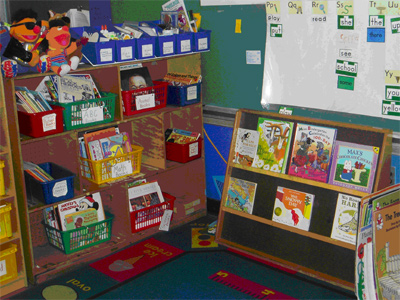
Your classroom library is the heartbeat to the literacy program in your classroom. The library should serve as a support to the balance literacy curriculum which allows students the opportunity to self select literature. When setting up the library in the early primary grades, here are a few things to consider.
|
- Libraries should be inviting and eye-catching.
- 30% of the library should be leveled, that’s about six leveled book baskets.
- Books must be easily accessible to the students.
- Bins must be labeled clearly and color coded.
- Include plants, cushions, rugs, mats, pillows, and stuffed animals.
- Changes should be evident to reflect the work of the class.
- Organize the books by genre, author, and topic.
- Create research centers when studying specific areas in social studies and science.
- Include pictures of your students engaged in reading.
- Create a listening center for less independent readers and ELL students.
- Create a book shopping chart for table groups.
- Students should have their own book baggies which contain “Just Right Books” as well as a variety of non-leveled books which may of may not be at the child’s independent reading level.
- Children should have enough books in the baggies to keep them reading for a week, but not so many that they jump from book to book in an attempt to read them all.
- Create a bin with the read aloud books you plan to use with a particular unit of study.
The Primary Literacy Standards state that students should engage with books, either independently or with assistance every day.
- Grade 1 – Four or more books every day
- Grade 2 – One or two short books or long chapters every day
- Grade 3 – 30 chapter books a year
In the primary grades the classroom library serves several functions, and it is the place where most of your students’ learning will take place. Make it a warm, inviting and accommodating place for all your students and everyone will benefit.
Reference: Growing Readers: Units of Study in the Primary Classroom, Kathy Collins, Stenhouse Publishers, 2004.
Do you have a question or comment about this article? E-mail Julia.
See also:
Developing Your Classroom Library by Lisa Peterson
|