![]() |
|
|
|
|||||||||||||||||||||||||||||||||||||||
|
This project is designed as a once-a-month activity to introduce students to a variety of genres, to promote note-taking and writing skills, to integrate technology, and to create multi-genre responses to literature using "Big Books." Students will use various graphic organizers to enhance pre-writing planning, and utilize the Internet as a research and publishing tool. Each month, the project culminates with an eye-catching display of student work to display in the school.
|
|
||||||||||||||||||||||||||||||||||||||
|
4. Use technology resources for research, writing, and production of published works. |
||||||||||||||||||||||||||||||||||||||
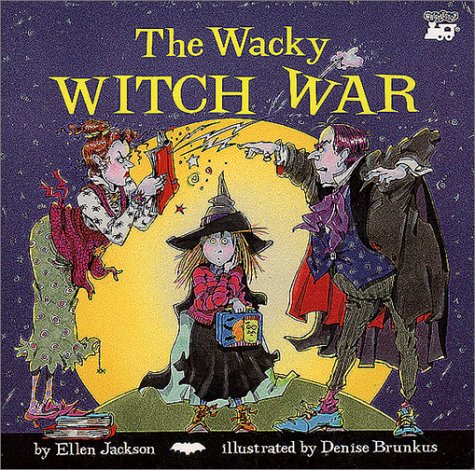
The Wacky Witch War by Ellen Jackson Aim:
Do Now: Write a paragraph predicting what the book will be about (after viewing the front cover). Procedure: 1) Show the front of the book to the class and ask the students to complete the DO NOW. 2) Distribute the Story Parts Map and explain each story part. 3) Explain that the students will be required to take notes on the Story Parts Map. 4) Ask the students to copy (in list form) the vocabulary words for the book. 5) Ask children to define as many vocabulary words as possible. Give context clue sentences for the remaining words in order to elicit correct definitions. 6) Read the book aloud. Ask the children to complete the Story Parts Map. 7) Ask the children to answer the following comprehension questions: When did the story take place? (setting) Where did the story take place? (setting) Who are the characters? (characters) What are the problems that the main character must solve? (plot) What steps does the main character take to solve the problems? (plot) How does the main character finally solve the problems? (solution) How does the book end? (solution) What lesson did you learn from this story? (theme) What is your opinion about this story? (response) 8) Teach the children the literary term: Alliteration. Ask the children to list the examples of alliteration in the story. (Alliteration is the repetition of the consonants at the beginnings of several related words: Wacky Witch War) 9) Higher order comprehension questions: How does Wendy know that her father is getting angrier at the end of the first three days of school? Why is Wendy's father getting so angry? How do you know that Miss Crispus is possibly a witch before she actually says that she is one? (Viewing) How does Wendy know what her father or Miss Crispus has done with his/her spell? Why did Wendy want her father to meet Miss Crispus? Why do you think that Wendy's father and Miss Crispus fall in love? Would they have fallen in love without the magic spell? What do you happened to Wendy's real mother? Possible vocabulary words: wacky wonderous cauldron concoctions pleaded scowl hocus pocus brewing approve reptiles extinct tantrum dismissed apologized staggered fumes menacing bulging sincere regretFollow-up: Ask the children to invent the script for their own original “spells”. They must also write a paragraph explaining the “spell” and describing its projected effect. They will be required to illustrate their project with pictures and images from the internet. (Suggested searches can be found on child-friendly sites such as kidsclick.org or yahooligans.com) These projects will be displayed on the bulletin board.
|
|||||||||||||||||||||||||||||||||||||||
| Day Two: |
Love You Forever by Robert Munsch Aim:
Do now: In a short paragraph explain the difference between “love” and “like”. Procedure: 1. Show the class the cover of the book and ask them what the picture has in common with the title. 2. Share the student answers to the Do Now and discuss the differences. 3. Draw a chart on the board and ask the children to copy:
4. Ask the children to take notes in the chart while listening to the story. This chart will function as the summary of the story and show sequence. 5. Read the story. 6. Ask the students how they would classify the story - is it a non-fiction, realistic fiction, Tall Tale (exaggeration)? At what point in the story did the author change the genre from realistic fiction to Tall Tale? When does the story revert back to realistic fiction? Why does the author blend the two genres? Try to get the children to realize that the author's purpose is to show that the mother would have liked to pick up her grown son but could not. This is the symbolism of her unconditional, eternal love for her son. 6. Ask the students why the author ends the story this way. Explain the word “continuity” and show how it applies to the ending. Follow-up: Ask the children to write a summary of this story based on the notes that they took (the chart). Another suggestion: ask the students to write an expository essay explaining a tradition that has been passed along in his/her family. Each summary or essay must be computer typed/word processed and illustrated with a computer generated image. These projects will be displayed on the bulletin board. |
||||||||||||||||||||||||||||||||||||||
Day Three: |
Aim:
Do Now: Quick Write (no longer than 5 minutes) – 1.Why do people need friends? 2. List the qualities of a good friend. Procedure: 1. Explain the genre: FABLE (A fictitious short story that utilizes animals as characters for the purpose of teaching a moral.) Give some other examples of Fables (“The Fox and the Grapes”, “The Tortoise and the Hare”) 2. Review the answers of the Do Now (Share) by constructing and completing a “T” chart on the board:
A discussion of how good friends complement each other (The definition of the word “complement” both literally and mathematically would fit nicely at this point.) 3. Explain that we will be reading two books by the same author that are sequels. Explain that a sequel is a continuation of a story. 4. Explain the literary term: Symbolism (The use of a concrete symbol to represent an abstract idea, e.g. a rose often represents love, a fox often represents the sly personality, the color black or red may represent death, and the word “sleep” commonly found in poetry represents death.) 5. Read the first story The Missing Piece and discuss the symbolism in the story. Again, a “T” chart would be a good graphic organizer to use to speed things along:
6. Discuss the THEME of the book. Advise the student of the deeper meanings behind this very simple story and explain the relevance to human relationships. Ask the children why the shape finally stops looking for his missing piece and what this tells us about the theme/moral of the fable. For a more advanced group the discussion of Conflicts (Man vs. Man conflict is really a Man vs. Self conflict). A brief explanation of quest and fulfillment can be inserted at this point. 7. The continuation of this book can be read on the same day or the following day. Using a “T” chart, evaluate the symbolism of the different shapes that become possibilities for the Missing Piece. Examine the themes/ morals of the second book: 1. Don't go where you don't fit and 2. Life takes off the sharp edges so that we eventually learn to “roll” together. A brief discussion of the conflict of individualism vs. conformity would complement this lesson. Follow-up: Ask children to list the different lessons that they learned from each fable. You may again wish to use a “T” chart:
Students will use the computer for constructing a graphic organizer. Students will also write their own fables (computer typed/word processed) and illustrate them using computer generated images. These fables will be displayed on the bulletin board.
|
||||||||||||||||||||||||||||||||||||||
| Day Four: |
Happy Birthday, Martin Luther King – by Jean Marzollo IMS – Ms. Elissa Berkowitz Aim:
Do Now: Brainstorming Activity – Students will write any information that they already know about Martin Luther King Jr. A KWL chart would be appropriate for this activity. Mini Lesson: Students will review the guidelines for note taking/appropriate graphic organizer/completing graphic organizers. Students will review the vocabulary words: Civil, Pacifist, Non-violent Students will do a semantic map of the words: Kill, Murder, Execute, Assassinate. Students will review note-taking strategies. Procedure: 1. Students will be allowed a five-minute period for the “Do Now” activity, with a share review period following the activity. 2. Students will learn the appropriate graphic organizer for biography note taking. A KWL graphic organizer or a time line is recommended. They should fill in the “K” section of the KWL chart first. They will then share their responses with the teacher, who will enter these responses on the KWL chart on the board. The students will next complete the “W” section of the KWL chart utilizing the 6 question words that will start their questions (who, what, where, when, why, how). 3. Students will be taught appropriate note-taking skills (see the essay writing tips below). 4. Students will be taught the different definitions of these words: kill, murder, execute, assassinate (semantic mapping). 5. The book will be read to the students. They will complete the “L” section of the graphic organizer while they are listening. Follow-up/Assessment: The students will complete a biographical essay from their notes and biographical information they have found online. They will also create a computer-generated picture/cover for their essay. The results will be displayed on the bulletin board.
Outline for Martin Luther King Essay Introduction Who is this essay about? Why are you writing this essay? What is this person famous for? Body-Summary His early life His great speech His wonderful ideas His terrific accomplishments Conclusion If Martin Luther King was alive today….
|
||||||||||||||||||||||||||||||||||||||
| Standards: |
|
||||||||||||||||||||||||||||||||||||||