![]() |
|
|
|
||||||||||||||||
| This unit is designed for middle school English Language Learners with varied English proficiency. It is designed to help transfer English vocabulary into existing academic concepts and develop the students' content area knowledge. The non-fiction genre is very helpful in this case, as it has facts to base on prior knowledge of students, and it develops high interest and motivation. Students will read the book The Emperor's Egg by Martin Jenkins and investigate a non-fiction book of their choice. They will utilize online graphic organizers, and use this information to create a PowerPoint presentation. Finally, they will read a fictional account of the same story - Solo by Paul Geragthy - and discovery literary elements which distinguish the two genres.
|
|
|||||||||||||||
|
4. Participate actively in reading, writing, speaking, and listening for information and understanding. |
|||||||||||||||
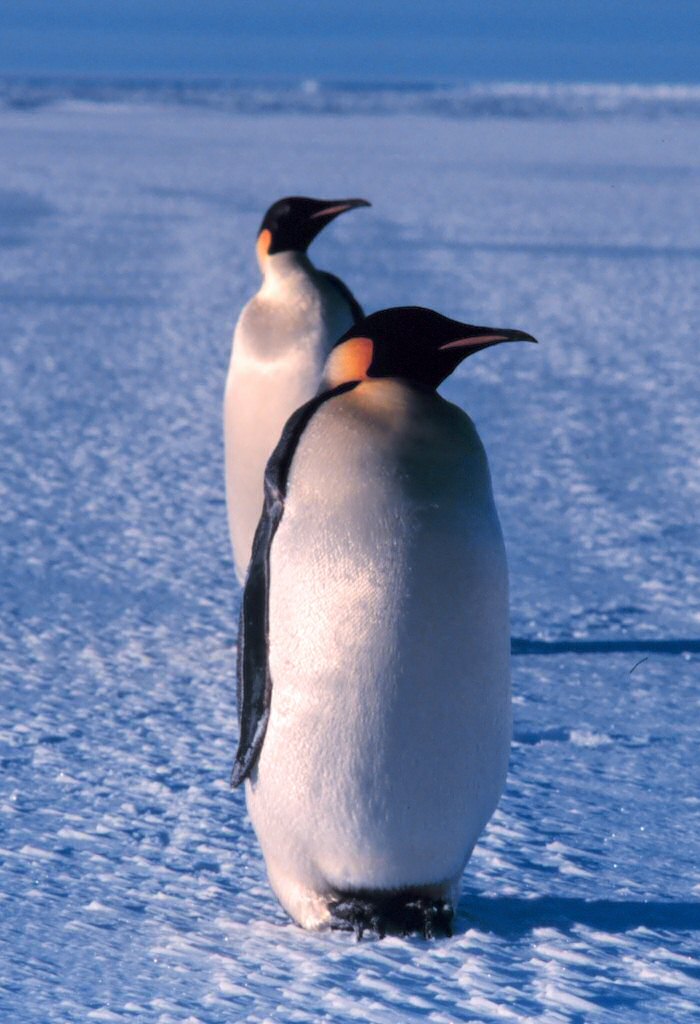
Shared Reading (The Emperor's Egg by Martin Jenkins) Task: Investigating the emperor penguin's life cycle: non-fiction as a genre Objectives: Students will be able to identify the facts of the emperor penguin life cycle in the non-fiction genre. Students will be able to investigate the facts of any animal's life cycle of their choice. Students will pose questions Students will make predictions. Students will participate in discussion. Students will document and record discoveries they made by themselves. Students will analyze their findings to use as a base for their writing. Motivation: Students will look at the illustrations in the non-fiction book The Emperor's Egg by Martin Jenkins and make predictions. Students will have a teacher's guided discussion as to why/why not it is possible to have a penguin as a pet. Procedure: Teacher will read the book (transparencies) to students on overhead projector. Teacher will emphasize the places where the facts of the emperor penguin's life cycle are described. Students will take notes (guided by the teacher) about the emperor penguin life cycle. The teacher will use pre-prepared reading strips. Questions: Where do emperor penguins live? What is the climate of their environment? What grows there? What do emperor penguins look like? What do they eat? How do they move? Are they a prey of other animals and who are their predators? How many eggs do they have at a time? When (season and month) does the egg hatch? Why is it necessary to keep the egg off the ice? How do penguins protect the egg from the ice? Who takes care of the egg? What do they eat when male penguins guard an egg? How long do they have to guard the egg? Does the female penguin help in taking care of the egg? When does the female penguin start helping the male penguin? Students will discuss the traits of non-fiction genre: Are there any main characters in the story? Who are the characters? Are they described through any imaginary situation or only scientific facts? Where do scientists/authors take the facts of animals' lives from? Assessment: Students will investigate the facts of a life cycle of animals of their own interest (teacher will present a few different non-fiction books about animals and insects). Students will record the facts of their own research. Students will specify the genre of the book they read (non-fiction or fiction). Students will explain why they think it is non-fiction genre.
|

||||||||||||||||
| Day Two: |
Emperor Penguin's Life CycleTask: Fill in the graphic organizers using the facts from the book The Emperor's Egg by Martin Jenkins. Then create your own four graphic organizers using the facts from the non-fiction book of your own choice. Follow instructions: Connect to the Internet. Type: www.ReadWriteThink.org Go to “Students Materials” and click. Go to “Animal Inquiry” and click. Scroll to “Animal Study: From Fiction to Facts” and click. Scroll to “Animal Inquiry Graphic Organizer” and click. Fill in your name. Fill in your graphic organizer using the information from the previous lesson (answers to the questions). Make four available organizers.
RUBRIC
|
|||||||||||||||
Day Three: |
Task: Make a PowerPoint presentation using the information from the graphic organizers of the non-fiction book of your choice. Follow instructions: Go to “Microsoft Power Point” and click. Choose “Blank presentation” and click OK. Choose the layout of the first slide and click OK. Optional: Go to the symbol “A” on the bottom of your screen and choose the “WordArt” for your title. There you can change the font style and the size of the font. You also have choices of shades. Type the title of your first slide. Write your name and class number for you first slide subtitle. Choose “insert” on your toolbox, scroll to “new slide”, decide on your layout and click OK. Take any feature from your graphic organizer and write it as a title (habitat, babies, enemies). Write facts describing the feature you chose as a title (cold weather, babies hatch from the eggs, leopard seals as predators). After filling in four slides, return to the toolbox and choose “format”, scroll to “apply design template” and click. Make a choice of slide's design and click apply. Download pictures from the “insert” command from your toolbox. Optional: download sounds and movie from the “insert” toolbox. RUBRIC
|
|||||||||||||||
| Day Four: |
Shared Reading - Solo by Paul Geragthy Task: 1. Sequence the events of the story. 2. Compare with the facts of the non-fiction story The Emperor's Egg by Martin Jenkins. 3. Investigate which events of the fiction story are based on the facts of the non-fiction story Objectives: Students will be able to identify which facts of the Emperor penguin life cycle became events of the fiction book. Students will be able to create a story based on the facts of the non-fiction book of their choice. Procedure: Teacher will read the book (transparencies) to students on overhead projector. Teacher will have students sequence the events in the story. Students will compare the events of the fiction story to the facts of the non-fiction story. Go to www.ReadWriteThink.org/materials/venn/index.html Help students fill out the Venn diagram comparing the facts from the non-fiction story to the events of the fiction story. Ask the questions: a) Which fact of the non-fiction became a conflict of the fiction story? b) What is the plot of the fiction story? c) Which facts of the non-fiction book became the plot of the fiction story? d) In which story (fiction or non-fiction) does the penguin behave like a person (has a name, emotions, makes his own choices)? Explain to students how to determine the main character of the story, plot of the story, conflict and personification. Assessment: Students will write a story, a play or draw an illustration depending on their level of English proficiency, based on the facts of the non-fiction book of their choice. Thus, the students will be able to transfer academic concepts learned in their native language into English. They will be able to use the new acquired vocabulary in different settings and functions. Even if the book Solo by Paul Geragthy is not middle school level, it matches ESL learners and at the same time the concepts are serious enough to make it interesting for them.
|
|||||||||||||||
| Standards: |
|
|||||||||||||||