![]() |
|
|
|
|||||
| This project meets many standards for English Language Arts, and can be adapted for a variety of grade levels. It can also be completed in a "one-computer classroom!"
|
|
||||
|
2. Use the Internet to gather information to be presented in charts and writing. 4. Write, edit, and publish a book review for an audience. |
||||
Book reviews http://www.spaghettibookclub.org/ http://www.shsonline.org/III_Grade/Book_review.html http://www.ticklebugs.com/pages/bookreviews.htm Author information http://www.acs.ucalgary.ca/~dkbrown/authors.html http://www.ipl.org/div/kidspace/askauthor/ http://www.eduplace.com/author/index_html.html http://sunlite.bamaed.ua.edu/ReadWriteNow/ http://kotn.ntu.ac.uk/authors/write.htm http://www.tbrnetwork.com/becoming.asp Book Talks |
|||||
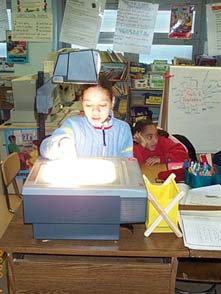
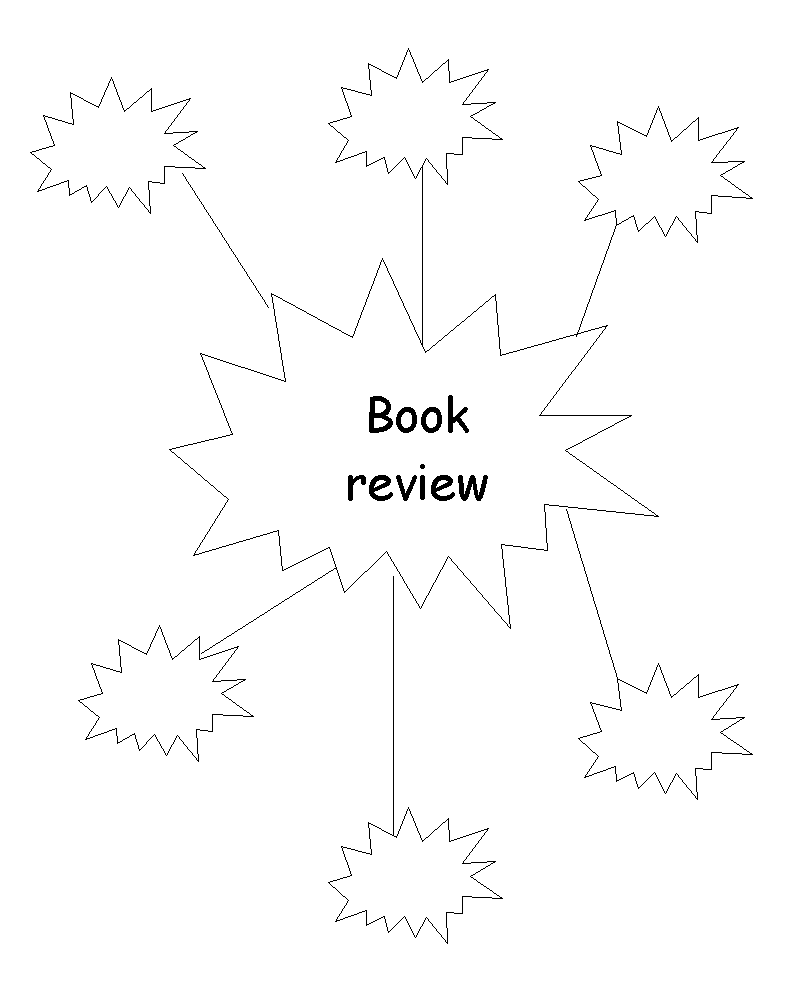
Title: What's In A Book Review? Aim: To become familiar with different formats used in book reviews. To develop a class web of different things that students can include in their own book reviews. Materials: Computer with Internet access Chart Paper / Markers Overhead transparencies of pre-selected book reviews (can be taken from newspapers, magazines, Internet, books) Individual web for book review Procedure: 1. The teacher will begin by writing “Book Review” in the center of a web on chart paper (see sample below). Ask children what they might know about book reviews. Record their responses on the web. 2. Show children a book review on the overhead transparency from the back of a book. (A collection of book reviews can be made by having great book reviews found in newspapers, magazines etc. copied onto a transparency.) Have children add to their individual web what other characteristics they see included in book reviews. If a projector is available the book reviews can be searched online as a class and discussed. If not, the children can go to the following web pages:
3. As children view different reviews they should continue to add to the web. Point out a few things they are unable to, eg. book reviews might include: title, pictures of covers of books, pictures of authors, how the reviewer begins their review, rating, bibliography of author, other recommended books. 4. Have children share what they have come up with and add to the class chart all of their findings. 5. Tell children that this will now help them decide what they would like to add to their book reviews. Evaluation: Children will be evaluated by the information that they were able to collect about book reviews.
|

|||||
| Day Two: |
Title: Getting to Know the Author Aim: To use different research tools to search about the authors of our books. To use information researched in our book reviews. Materials: Computer with Internet access KWL Charts Procedure: 1. The teacher will begin by asking the students to name some children's book authors that they know. 2. Distribute a KWL to each student. Ask them to write the name of the author who wrote the book they have chosen to review. 3. Students will be asked to fill in the “K” and “W” sections of their KWL charts. What do you know about the author? What would you like to know about the author? 4. The children are to research their author using different resources including the Internet. (Teachers should supply the students with other informational material such as biographies, articles, etc.) The children can look up information about the author in the following web pages: http://www.acs.ucalgary.ca/~dkbrown/authors.html http://www.ipl.org/div/kidspace/askauthor/ http://www.eduplace.com/author/index_html.html 5. The children will complete the “W” part of the chart. What I learned about the author. 6. Children who choose to include a section about the author in their book reviews can choose a few details from their KWL chart to help them.
Evaluation: Students will be assessed by the information that they where able to include in their KWL charts. |
||||
Day Three: |
Title: Add the Pictures! Aim: Children will learn to how to search for, save, and add pictures to their book reviews. Materials: Computer with Internet access and Microsoft Word Background : As part of the book review study children will learn that many book reviews include pictures in them. The pictures include pictures of the book covers, author, etc. As they are getting ready to publish their book reviews they might want to include pictures on their reviews. They will be able to add images to their reviews. This lesson will teach children to search images through www.google.com . Procedure: 1. To begin a whole class lesson log on to Google.com. Explain to the students that this is one of many ways to collect images to use in their final typed draft book reviews. 2. Demonstrate how to search for and save images. Steps to searching for Images through Google.com: -Log on to www.google.com . Click on the Images tab. -Type in desired topic (e.g. type in Three Little Pigs if you wish to add a picture of the cover of this book). Click enter. -Pictures will come up, double click on the image desired. The picture will appear again with details from the web page it is from. Double Click on it again. This time the picture will be on its own. -Save the picture in your desktop folder so that you can retrieve it later and add it to your typed draft. -Once the pictures are saved, the children can add their pictures using Microsoft Word. Click on Insert, scroll down to pictures, from file and insert the file from the foler where you saved the images. 3. Children should then be able to log on to www.google.com and search for the images that they wish to add to their book reviews. |
||||
| Day Four: |
Title: Editing to Share Aim: To learn how to publish and share their book reviews. Students will edit for an audience. Materials: Computer with Internet access Copies of children's drafts on overhead transparencies Chart paper to list of things to look for while editing Procedure: 1. The teacher should demonstrate how to edit a piece to the students. Before the teacher starts the lesson tell the students that they will be using their book review drafts to teach them how to edit their pieces and get them ready to share. 2. The teacher should copy several of the drafts that the students have made nto overhead transparencies. Use the ones that have different errors on them so that you can cover more. 3. After you have corrected a draft you can begin to make a list of the things that the students need to look for while editing their pieces. 4. The children can then edit their own pieces before they get ready to type up their final drafts. They might choose to interchange them with each other and edit one another's. 5. The children should be aware that when a piece of writing is going to be shared, it should to be edited. These book reviews will be shared with their classmates as well as through the Internet therefore they should be edited. 6. After the students have edited their pieces and typed their final draft they can go on one of the following sites and share their book reviews: http://sunlite.bamaed.ua.edu/ReadWriteNow/ http://kotn.ntu.ac.uk/authors/write.htm http://www.tbrnetwork.com/becoming.asp Extension: The children can also have book talks with a group of children that have chosen to write about the same book. The children can read and find out how to start their own book talk groups by logging on to http://www.booknutsreadingclub.com/startingaclub.html
|
||||
| Standards: |
English Language Arts Response to Literature
|
||||