“So
Tell Me About Your Trip...”
Project
URL:
http://teachersnetwork.org/teachnet-lab/motthallschool/asalcedo/TripUnit/index.htm
How it works:
Most children love to go on vacations, but few have a sense of the
many factors involved in planning and taking a trip. This unit deals
with topics relating to trip planning. Students research destinations
and the factors involved in taking a trip and learn how averages play
a part in making decisions. For example, when students learn how to
find the average speed and the distance to a particular destination,
they can estimate how long the trip will take and determine if they
can complete a specific activity by a certain time. They further develop
their math skills by using gas prices to identify the mean, mode,
median, and range of a data set. For a final project, students prepare
a display board and a movie about their excursion. In the end they
learn more things than the answers to "Are we there yet?"
and "When are we going to eat?”
Standards
addressed:
Students formulate a problem,
determine information required to solve the problem, choose methods
for obtaining this information, and set limits for acceptable solutions.
Math concepts included are determining mean, median, and mode and
calculating speed, distance, and time.
Materials
used:
Required materials include
computers with Internet access; software such as Microsoft Movie Maker,
Photo Story 3, or iMovie; spreadsheet software Excel; and a digital
projector.
The students:
Students should be grouped cooperatively. Groups should be heterogeneous.
Each group should have a student who demonstrates some type of leadership
ability and one with artistic ability.
Overall value:
One of the biggest complaints from students is “How are
we going to use this stuff?” This project provides a transparent
real-world application on the use of mathematical concepts. The creation
of a display board and movie gives students activities where they
not only do research and solve mathematical problems, but where they
present their findings in a creative and lively manner.
Tips:
Students should
work with Windows XP computers that have Movie Maker or download Photostory
3. The project can also be done with Apple iMovie. Through each lesson,
groups should work on different phases of the project. This can be
included as homework for each lesson. Rubrics and checklists should
be given to groups as soon as the travel destination is decided upon.
|
About the teacher:
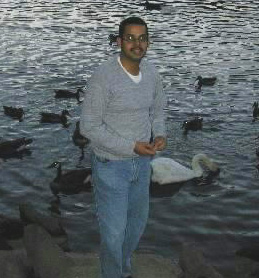
Anthony Salcedo is laptop coordinator at the Mott Hall School,
the first inner city public school to start a laptop program. He was
a keynote speaker at the Microsoft Laptop Summit 2000 and has presented
at numerous technology conferences around the country. He has been
videotaped presenting exemplary lessons on four occasions for different
professional organizations. He has also received recognition from
three superintendents for his achievements, is a certified NFTE instructor,
and has worked as a translator in the Caribbean for the United Nations.
He was an adjunct instructor for NYU and Mercy College and is in his
13th year of teaching in the New York City public school system.
E-mail:
asalced@nycboe.net
Subject Areas:
Math
Technology
Grade Levels:
6-8 |