Who Eats Whom? A Food Chain WebQuest
Project URL:
http://teachersnetwork.org/teachnet-lab/glasgold/food_chain/introduction.htm
How it works:
Every living thing on Earth depends upon other living things in order to stay alive. Scientists have studied different habitats and found how animals and plants are linked in a "chain" of life. This WebQuest contains a series of activities based on the food chains that exist on an island in the South Pacific. Students travel with a group of scientists via the Internet; visit various sites where they do research, define important words and terms, and perform activities; and write, Illustrate, annotate, and present a book and give an oral presentation about the island's food chains. In the process, the students work in cooperative learning groups, choosing roles for themselves.
Standards addressed:
Students use technology to navigate sites and gather, analyze, organize, and present information; participate in group meetings to research, discuss, and evaluate information; interpret and synthesize information to produce a research report; prepare and deliver oral presentations; and demonstrate understanding of big ideas and unifying concepts, and of science as a human endeavor. They ask questions about natural phenomena, objects and organisms, and events and discoveries; identify problems; propose and implement solutions; evaluate the accuracy, design, and outcome of investigations; work individually and in teams to collect and share information and ideas; and demonstrate an understanding of organisms and their environments.
Materials used:
Required materials include computers with Internet access, drawing programs like KidPix and HyperStudio, and a word processing program such as Apple Works or Microsoft Word.
The students:
The students are from grades three to five, and are of average ability. They should be familiar with computers and Internet research, and with drawing and word processing programs.
Overall value:
The best part of Who Eats Whom is that all of the work is done on the computer. The Internet is used for research, activities, drawing, and writing. The children learn to work together cooperatively to produce a finished project that they are all proud of and had a hand in producing.
Tips:
Do research beforehand so the children only go to relevant sites, and match the students' abilities and temperaments so the various groups are workable.
|
About the teacher:
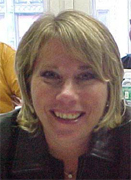
Bonnie Glasgold is a science enrichment teacher at P.S. 101, Brooklyn. She has been teaching for over 25 years and has been involved with Teachers Network for over 6 years. She has written many science curriculum units for TeachNet and also conducts New Teacher Online Survival Courses in Classroom Management and Violence Prevention. This year she became a Teachers Network mentor.
E-mail:
bmglas@aol.com
Subject Areas:
Science
English Language Arts
Technology
Grade Levels:
3-5
|