What's the
Matter?
Project
URL:
http://teachersnetwork.org/teachnet-lab/ps101/matter/index.htm
How it works:
What are we made of? What is the
universe made of? Why is gold different than silver? How can water be ice,
water, and steam, and still be water? These are questions children ask all
the time. What's the Matter? is a series
of four lessons designed to explain to young students, grades 3-5, what
"stuff" is made of. The lessons delve into what matter is, the states of
matter, and how heat and cold cause it to change states. From there,
students learn about atoms--the building blocks of elements and the basis
of every kind of matter there is. They learn how to describe the
properties of elements, and the differences between compounds, mixtures,
solutions, and suspensions. Then they learn of the potential uses for
atomic power. Students use the computer as a technological tool,
researching, learning, quizzing, testing, and watching online movies.
There is also a "hands-on" component to each lesson so children can
investigate the world of matter.
Standards
addressed:
Students demonstrate an understanding of
objects and materials, heat and cold, big ideas and unifying concepts.
They demonstrate an understanding of the designed world, and of science as
a human endeavor. They ask questions about natural phenomena, objects and
organisms, and events and discoveries; identify problems; propose and
implement solutions; and evaluate the accuracy, design, and outcomes of
investigations. They work individually and in teams to collect and share
information and ideas, and use technology and tools to gather data and
extend the senses. They demonstrate scientific competence by completing an
experiment and also non-experimental research using print and electronic
information, and use scientific notation for writing about experiments.
Materials
used:
Required materials include a computer with Internet
capabilities and Apple Works or another word processing program. Materials
for experiments are listed under each activity.
The students:
The children are of average ability and
from grades 3, 4, and 5. They need a basic understanding of the properties
of substances, knowledge of how to conduct research using web sites, and
skills to use a word processing program.
Overall
value:
This unit's best feature is the use of the computer for
Internet-based lessons, activities, and quizzes. There is an abundance of
material on this topic that will keep any student occupied with something
on his/her level. Another excellent feature is the hands-on activities for
each lesson. This unit can be adapted to grades 3-5, using as much or as
little as the children can handle.
Tips:
Make sure students are familiar with
navigating web sites, and using the Internet for research. Screen all
sites beforehand so you know what can be expected. Have all hands-on
materials ready for each experiment.
|
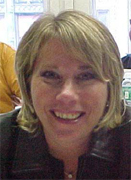
About the teacher:
Bonnie Glasgold is a
science enrichment teacher in Brooklyn, NY. She believes in hands-on
lesson development. She also uses literature to enrich lessons. She has
been teaching for 24 years, the last ten as a science
teacher.
Email:
bmglas@aol.com
Subject
Areas:
Science
Technology
Grade
Levels:
3-5
|