Our
Little Town
Project URL: http://teachersnetwork.org/teachnet-lab/ps88/ps88/phyllis/index.htm
How
it works:
Our Little Town is an outgrowth of the study of the
community that is part of the second grade social studies curriculum.
The study consists of learning the various aspects of the students'
community, i.e., the places, residents and workers, and various
landmarks. The intense study took place within the first three months of
school, however, the community is always connected to the other social
studies themes. In this program, the students take local walking tours
and incorporate technology by using a digital camera to take
photographs. In the classroom, the students use the computer to display
these photographs. With the use of different software programs such as
SimTown, the students create a visual map of the community as a
culminating activity. The computers allow the students to display their
own work in a unique and creative way.
Standards addressed: The students use a
variety of intellectual skills to demonstrate their understanding of the
local, national, and global geography of the world, including the
distribution of people, places, and environments over the Earth's
surface. They read, write, listen, and speak for information and
understanding; collect data, facts, and ideas; discover relationships,
concepts, and generalizations; and use knowledge generated from oral,
written, and electronic sources. They also read, write, listen, and
speak for critical analysis and evaluation, and analyze experiences,
ideas, information, and issues presented by others using a variety of
established criteria. As speakers and writers, they present their
opinions on experiences, ideas, information, and issues.
Materials
used:
A computer with Internet access is needed, along with a digital
camera and the SimTown software program published by Maxis.
The students:
The students that took part in this program were second graders in
an inclusion classroom. This means that some of the students are part of
the special education population. The program worked well with this
population because many of the lessons consist of hands-on activities
and alternate forms of learning. The required skills consist of
familiarity with computers and the ability to use a digital camera.
Working in small groups also makes it easier to complete the computer
aspect of the project.
Overall value:
Many of the students that took part in this project did not have home access to technology. For many of them, using a
digital camera was a new and exciting experience. Using the photographs
helped the students be more creative when completing their own maps
using SimTown. This program can be adapted for students of various ages.
It allows them to become more familiar with their own community while
learning about the use of modern technology.
Tips:
Instruct the students in the use of the digital camera in small groups,
so that each child has an equal chance to try it without the rest of the
class becoming restless. It also helps to teach two or three students
how to use the related software and then allow them to teach the rest of
the class.
|
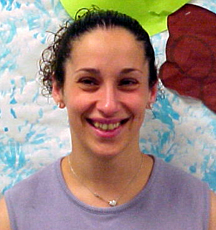
About the teacher:
Phyllis Sicuranza is currently teaching inclusion within a
co-teaching model second grade classroom at P.S. 88Q. She enjoys reading
and exploring the many possibilities that the computer has to offer. Her
familiarity with technology allows her to incorporate the computer into her
lessons frequently. This has helped her become more effective and
creative in her work. In turn, it has also helped her students become
more creative. This is her second year teaching.
E-mail:Volpona@aol.com
Subject
Areas:
Social Studies
English
Grade
Levels: 1-3
|